
For this edition of Giovanna’s Gems, I wanted to explore an aspect of Italy’s rich cultural heritage that combines history, artistry, and tradition in a living, evolving form. To do this, I asked Siel Agugliaro, a musicologist who studied at the University of Pennsylvania, to share his perspective on Italian opera singing. (Siel is also married to Marika, our very own director of operations at Discover my Italy!) His insights set the stage for our feature on the recent UNESCO recognition of the practice of Italian opera singing: a celebration of the passion and legacy that continue to shape opera today.
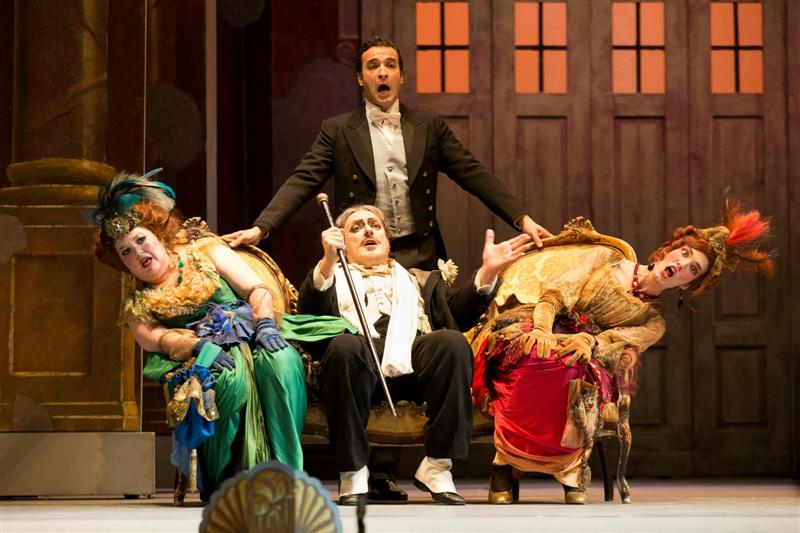
In late 2023, UNESCO officially inscribed “the practice of Italian opera singing” on its list of Intangible Cultural Heritage. The news was celebrated in grand style with a gala concert at the Verona Arena in June 2024, attended by Italy’s top political leaders and broadcast across Europe. For opera lovers, this recognition seemed natural: after all, Italy has given the world Verdi, Puccini, Rossini, and so many others.
Yet the listing’s wording reveals something intriguing. UNESCO did not recognize “Italian opera” as a genre, but rather “the practice of opera singing in Italy.” This may sound like a small distinction, but it raises fascinating questions. What exactly does “Italian opera singing” mean? Is it a fixed style tied to the Italian language and tradition, or is it a living, evolving art form shaped by singers, teachers, and audiences around the world?
Opera as we know it began in Italy at the start of the seventeenth century, in the courts and salons of Florence and Mantua, with works like L’Orfeo by Monteverdi. Over the next two centuries, a network of opera houses flourished across the peninsula, spreading into every major city and many smaller towns. This growth led to the emergence of Italy’s unique and closely clustered tradition of teatri all’italiana, theaters featuring multiple tiers of boxes and a characteristic horseshoe-shaped design. Many of these historic venues, from grand houses like La Scala in Milan to jewel-box theaters in provincial towns, still operate today, offering an unparalleled connection to the genre’s past.
By the 19th century, Italian opera had become an international phenomenon. The golden age of belcanto, with Bellini, Donizetti, and Rossini, was followed by Verdi’s dramas of national pride and Puccini’s lush, modern romances. These works traveled quickly across Europe and to the Americas, often premiering abroad and performed by singers from around the world. Even so, Italian opera singing retained its connection to Italy’s language, its theaters, and its teaching traditions, passed orally from maestro to student in conservatories and academies.
Today, scholars and professionals in Italy still debate how to define this tradition. Some emphasize a vocal style rooted in the musicality of the Italian language and in expressive, physical stagecraft. Others see it as a broad, evolving practice that has absorbed influences from many cultures over centuries. And the repertoire itself defies easy categorization: Mozart’s Italian-language operas were composed in Austria, and Maria Callas, one of the most famous “Italian” opera singers, was born in New York to Greek parents.
For travelers, this lack of a single definition is not a drawback, but an open door. It means that every performance in Italy offers a different window into the tradition, shaped by the voices, languages, and interpretations of the artists on stage. In Milan, an evening at La Scala might bring Verdi’s La Traviata to life with a cast assembled from across the globe, each singer adding their own color to the music. In Naples, home to the 18th-century Neapolitan School that shaped composers like Pergolesi and Cimarosa, a rising local soprano might bring fresh energy to Puccini’s heroines. And in Venice, historic theaters such as Teatro La Fenice still offer the thrill of hearing music in the very spaces where operas by Rossini, Bellini and Verdi once had their first performances.
he UNESCO recognition will help protect and promote opera singing in Italy, but it also highlights the importance of experiencing it in person. Seeing and hearing Italian opera where it has been nurtured for centuries, while knowing that its history is complex, fluid, and open to interpretation, adds a new depth to the experience.