
For this edition of Giovanna’s Gems, I wanted to do something a little different. When it comes to pesto, who better to tell the story than someone who grew up surrounded by the very hills and coastline that gave it life? So I asked Siel Agugliaro, the husband of Marika, our director of operations here at Discover my Italy, to share his personal perspective. Siel grew up in Lunigiana, on the edge of Liguria, and his memories of pesto go far beyond the recipe itself, touching on family, tradition, and the flavors that shaped his home.
Enjoy his take!
by Siel Agugliaro
Growing up in Lunigiana, a beautiful corner of northern Tuscany that leans into Liguria and its Riviera, pesto was much more than a sauce. It was the taste of home, a flavor that carried the scent of our gardens, the golden stillness of a summer afternoon, and the warmth of sharing a hearty meal on a crisp winter evening. Later, when my family moved to Lake Maggiore in my late childhood, the memory of that flavor traveled with me. Yet, as I explored other parts of Italy (and, later, of the world!), I discovered that pesto wears many faces.
The question is: which one is the real deal?
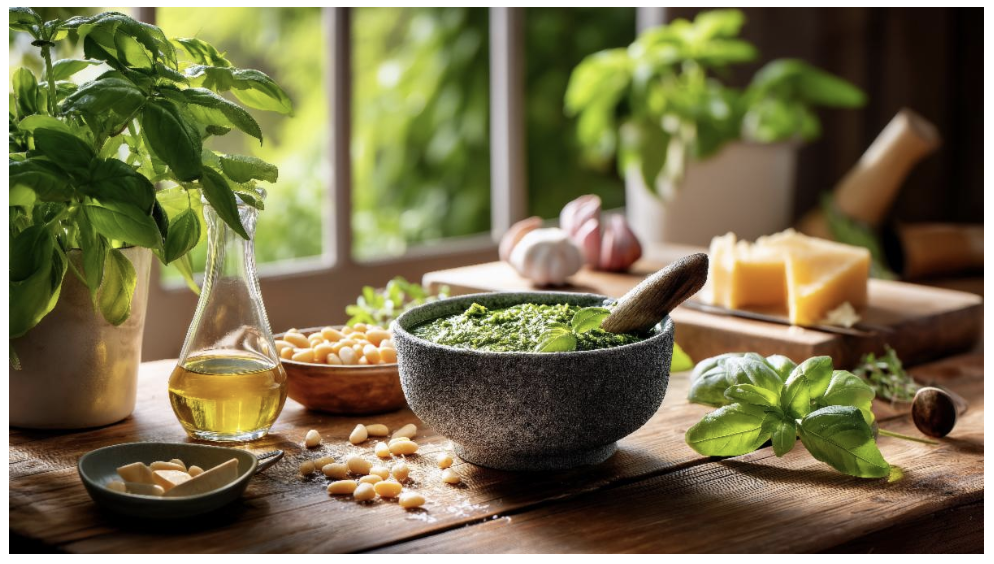
For me, the answer will always be Genoa pesto, also known as pesto genovese. This is the pesto I grew up with, the one that still makes me pause and close my eyes at the first bite. It carries the prestigious DOP label (Denominazione di Origine Protetta), which means that both its ingredients and its preparation are protected by law. The recipe is a beautiful balance of freshly picked Ligurian basil, fragrant garlic, Parmigiano Reggiano and pecorino cheese, the best extra virgin olive oil, delicate pine nuts, and a pinch of coarse sea salt. Traditionally, everything is crushed slowly in a marble mortar with a pestle, a process that coaxes out the essential oils of the basil and blends all the elements into a creamy, fragrant sauce. Purists may say this is the only true way to make pesto, but most Italians, including many in Liguria, use a blender instead: it is faster and still produces a sauce that is fresh, vibrant, and utterly delicious.
The history of pesto stretches far back, though not in the form we know today. Many believe it evolved from agliata, a medieval Ligurian sauce of crushed garlic and walnuts used to preserve food and add flavor to simple meals. The modern basil-based recipe only began to emerge in the 1860s, when fresh herbs and imported pine nuts became more widely available, and Genoa’s merchants brought home influences from abroad. Over time, it became the proud culinary emblem of Liguria, recognized around the world for its fresh, green brilliance.
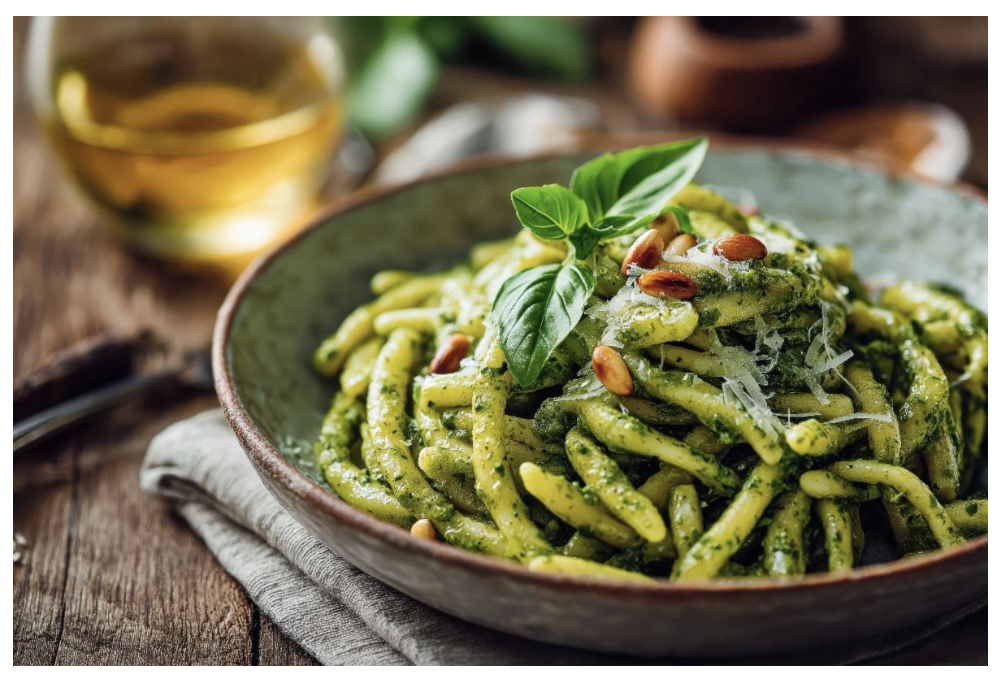
In my family, pesto is the star of trofie al pesto, the hand-rolled Ligurian pasta often served with tender green beans and chunks of potato. It was also a constant in our minestrone, or vegetable soup, made even richer by the addition of large pieces of Parmigiano crust that softened slowly as the soup simmered. These recipes were less about following strict rules and more about celebrating the joy of eating together, perhaps at the end of a long working day.
Of course, pesto in Italy does not end here. In Modena, for example, there is a pesto that surprises first-time tasters: instead of basil as its main ingredient, it uses lardo, cured pork fat, to create a spread that is savory, rich, and deeply rooted in Emilia’s culinary traditions. Then there is the Sicilian version from Trapani, where ripe tomatoes and almonds join basil, garlic, and olive oil to produce a vibrant sauce that tastes of sun-warmed orchards and Mediterranean breezes. These variations are delicious in their own right, each reflecting the character of its region and the ingenuity of local cooks.
Still, for me, the real pesto will always be the one from Liguria. It is a heritage, a craft, and a connection to the land where I grew up.